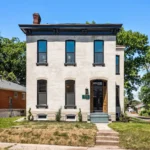

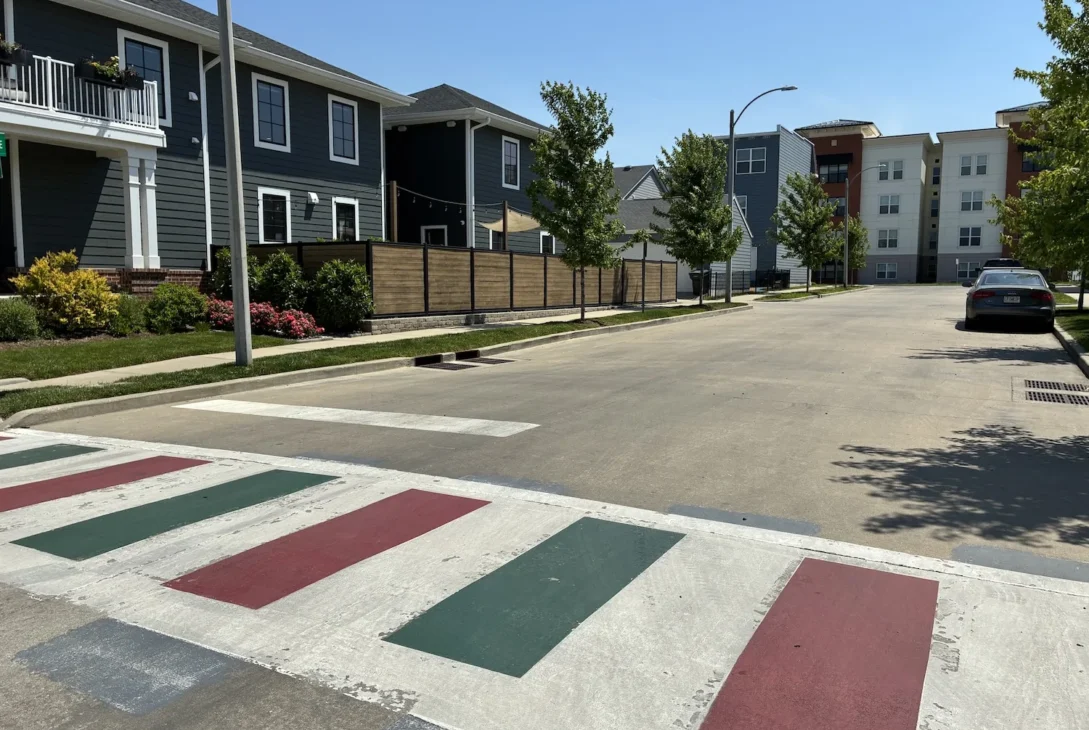
The Hill has experienced unprecedented construction activity in recent years, more reminiscent of sprawling suburban development than a dense urban neighborhood. Moda at The Hill introduced 225 new residential units as part of an 11-acre project. A former special education facility has transformed into 78 townhouses. Throughout the neighborhood, new infill construction and renovations are replacing modest one- and two-bedroom homes with larger residences.
This rapid development hasn’t met with universal approval. Some residents are now exploring a potential solution that could fundamentally reshape development rules: establishing a historic district.
Get a fresh take on the day’s top news
We will never send spam or annoying emails. Unsubscribe anytime.
Nicole Robben, a third-generation Hill resident whose children represent the fourth generation attending St. Ambrose Catholic School, is among those considering a historic district proposal, though she emphasizes the initiative remains in its early stages.
“The Hill has obviously changed quite a bit since I attended St. Ambrose and now with my kids there, though not necessarily negatively,” she explains. However, she believes new construction—particularly large-scale developments—may require regulation. “We want to preserve The Hill,” she states. “This isn’t about freezing the neighborhood or preventing growth. But when growth happens, I’d like to ensure it maintains the neighborhood’s character.”
Historic districts vary significantly, even within St. Louis. Lafayette Square enforces rigorous design standards for building facades (with stricter requirements for pre-1919 structures), while Tower Grove East, established in the past decade, focuses primarily on regulating new construction and additions. That district was created partly due to concerns about modular homes in a neighborhood built largely between 1890-1920.
Robben favors the Tower Grove East approach: “I don’t want residents feeling restricted from changing their door color or exterior home details. Rather, we want to ensure major developments consider community input when making significant decisions.”
Bob Bettis, the city’s cultural resources director, emphasizes that establishing a historic district involves a complex, time-intensive process. Following neighborhood discussions about which blocks qualify and what regulations apply—potentially lengthy negotiations—the city holds public hearings. Only then would the Preservation Board, Planning Commission, and Board of Aldermen review the proposal.
“Consensus is essential, with majority support from affected residents accepting regulation,” Bettis explains. “This will be an extensive undertaking.”
The process becomes more complicated as the city simultaneously updates its comprehensive zoning code. City Planning Executive Miriam Keller confirms these efforts will proceed independently while maintaining coordination.
“We’ll coordinate to prevent zoning code directions from conflicting with a potential Historic District,” she says. “The historic district would function as an additional regulatory layer on top of zoning regulations, providing specific standards for that particular district.”
Alderman Matt Devoti is encouraging residents to attend a May 21 meeting with Bettis and Keller to explore available options. While supporting residents’ right to information, he expresses reservations about the proposal.
Devoti himself lives in newer construction: he and his wife relocated to The Hill from St. Louis Hills in 2018, purchasing an older condemned home, demolishing it, and building a substantially larger replacement. “It’s not ostentatiously modern, but it doesn’t fit the neighborhood’s traditional aesthetic,” he acknowledges.
Property values have climbed dramatically alongside larger homes. Even single-bedroom houses now command over $200,000, while renovated three-bedroom homes list at $749,000—prices unimaginable just years ago.
Given current land costs, Devoti believes developers cannot economically construct smaller homes. He worries significant restrictions could stall neighborhood growth. “At these prices, single-story shotguns aren’t marketable for developers,” he observes.
Devoti also questions what the neighborhood loses by restricting new family influx. “We’re maintaining neighborhood vitality through growing families,” he notes. “What happens if we halt that entirely?”
Robben similarly opposes halting development. She also owns newer construction; like Devoti, her older home was demolished to build a much larger residence.
She supports such construction: “Aging homes deteriorate, and investors wanting to improve the community deserve encouragement,” she says. Yet she worries that unlimited growth will diminish The Hill’s unique character—the very quality attracting newcomers and longtime residents alike.
“I want to preserve our neighborhood’s overall identity and maintain resident input,” she concludes. “We’re not opposing change or investment. We simply want development that feels deliberate and appropriate, not projects that fundamentally transform our neighborhood’s essential character.”