
Access control technology has evolved dramatically. Previously, a dead battery or malfunctioning sensor meant trudging down your driveway in darkness to manually grant entry to visitors. Today, these inconveniences are largely a thing of the past — though the abundance of available options can make choosing feel daunting.
Jerry Gianopulos serves as sales manager at The Birdsong Company, a St. Louis-based business operating for seven decades with expertise in garage door maintenance, gate installation, opener upgrades, and access control systems. I reached out to him for insights on the latest developments in access control technology for both single-family homes and multi-unit properties.
Get a weekly dose of home and style inspiration
We will never send spam or annoying emails. Unsubscribe anytime.
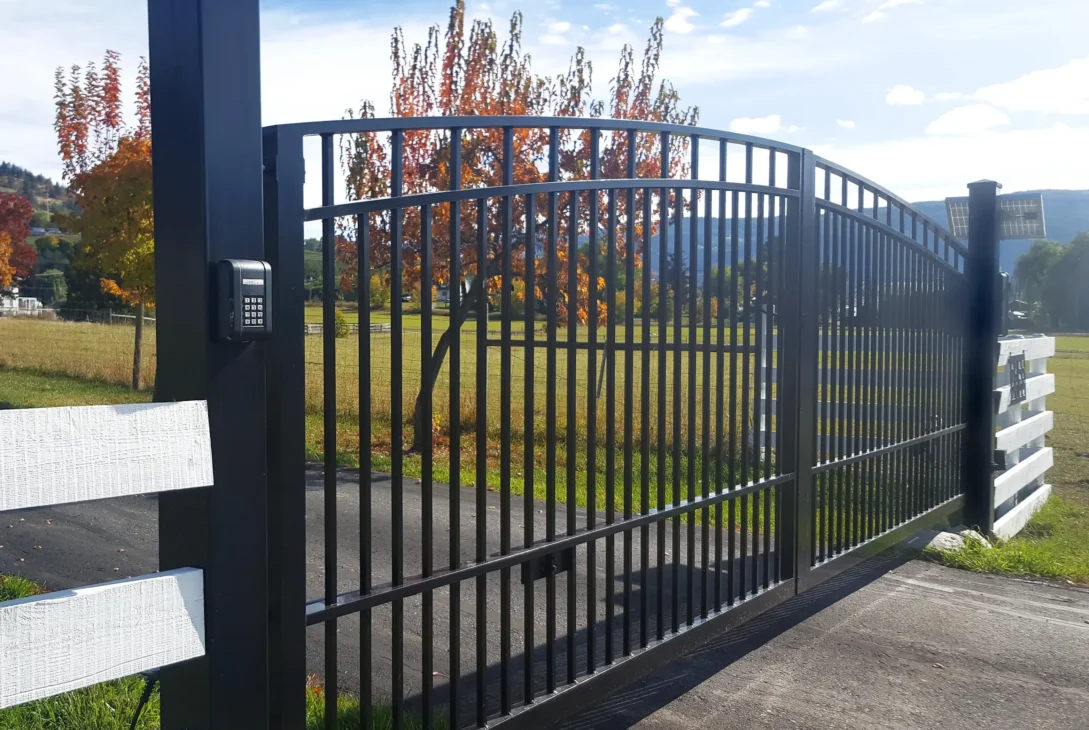
“The most basic option is a driveway gate operated by remote control,” he explains. This battery-powered system works similarly to garage door keypads and is straightforward to operate, but has one drawback: regular battery maintenance is essential. If homeowners neglect battery changes, the system stops functioning. “It always happens at the worst possible moment,” Gianopulos notes. “They can’t use the code because the battery’s dead.” To address this concern, Gianopulos recommends installing a wired keypad with automatic exit sensors—a device or “eye” that detects vehicles from up to 25 feet away and opens the gates automatically. This setup requires professional installation. “We install a concrete pad with a gooseneck, mount the sensor on it, and run wiring through a trench to the gate opener,” he explains.
For multi-tenant properties—whether large neighborhoods, apartment complexes, or subdivision alleys—keypad systems work well, but current technology favors telephone entry systems. Resembling a compact iPad mounted on a post, these systems capture video or photos to identify visitors and transmit the data to residents’ phones. “The screen instantly captures a photo of you, allowing verification before access is granted,” Gianopulos says. “Even those unfamiliar with newer tech adapt quickly because it’s incredibly user-friendly,” he adds. If no one answers the visitor’s call, the system automatically dials up to nine stored phone numbers per unit to complete entry.
Temporary or permanent access codes present an additional entry method for regular vendors or guests. “If you’re a frequent vendor and don’t want constant calls, you can receive your own code,” Gianopulos explains. Similarly, codes can be deactivated when homeowners wish to restrict someone’s access.
Modern technology has made access so seamless that homeowners need only carry their phones. Previously, HID cards or physical smart cards were required, necessitating manual proximity to a reader for gate or door access. Today, codes integrate directly into the entry screen. QR codes have also become increasingly popular. Homeowners can share them with anyone granted gate access, making them ideal for temporary permissions. “For example, if you’re hosting an event with 50 guests this weekend, you can distribute that QR code to everyone,” Gianopulos notes. “Come Sunday, those codes stop working.”
Windshield tag readers offer another gate operation method, using cameras to detect codes embedded on vehicles and trigger gate opening. While applicable to residential use, they’re most effective in high-traffic areas with frequent access needs. Derek McCutcheon, Birdsong’s owner and operations director, identifies a limitation: the reader must be positioned within 15 feet of the vehicle to function properly. “Typically, homeowners prefer apps or remotes for maximum convenience,” McCutcheon states.
Before implementing any system—whether using QR codes or advanced screen technology—consult your vendor regarding monthly maintenance fees, cellular service charges, and system upgrade capabilities as technology advances.