
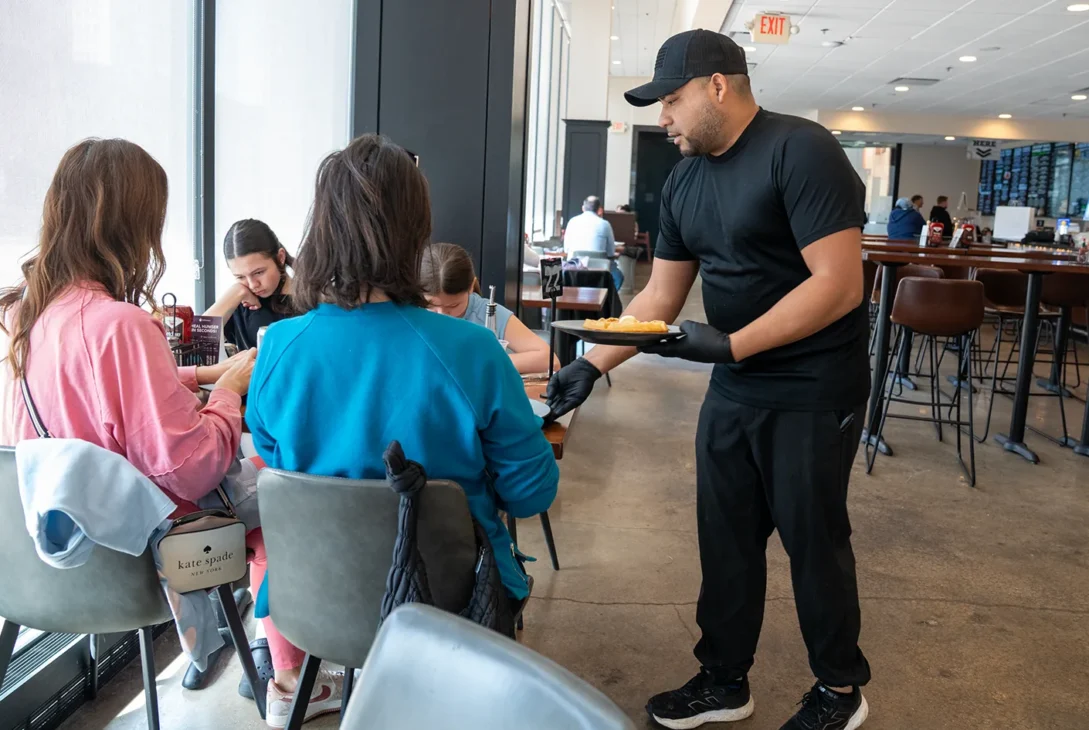
Running a restaurant is notoriously challenging, and downtown St. Louis is no exception. The area has experienced a regular cycle of food establishments shutting down, ranging from innovative concepts to long-established venues.
Despite these challenges, some establishments have thrived by adapting to the influx of visitors during major conventions and sporting events, including this year’s figure skating championships and NCAA basketball tournaments. Downtown restaurant owners attribute much of their success to learning how to manage the unpredictable flow of customers, which they say distinguishes the downtown dining market from other local restaurant scenes.
Keep up with local business news and trends
We will never send spam or annoying emails. Unsubscribe anytime.
“The difference is dramatic and can determine whether a business survives or fails,” says Corey James, owner of Buddy’s Local Grill & Bar and Bella’s Coffee Cafe, both located just blocks from America’s Center.
Before Bella’s recent transformation into a coffee bar from its previous frozen yogurt focus, James found that spring high school volleyball tournaments—hosted annually in St. Louis for the past six years—motivated him to extend operating hours even during colder months.
“The volleyball convention brings tremendous value to downtown St. Louis,” James explains. “It’s one of the most successful conventions we’ve experienced at Bella’s in six years. We open early specifically to accommodate these visitors.”
Convention traffic plays a vital role for downtown hotels and restaurants, according to Matt Ratz, owner of Lou Restaurant Group, which operates the breakfast and brunch spot UKRAFT in both downtown and Chesterfield, as well as the upcoming GuacoTaco.
“The importance of conventions cannot be overstated,” he says. “Venues need robust restaurant options to support convention attendees, because a poor dining experience means they won’t return.”
Ratz points out that his downtown UKRAFT location in the Peabody Building benefits from its convenient proximity—a five to ten minute walk—to key downtown destinations including Washington Avenue, Ballpark Village, the Arch Grounds, and Enterprise Center. This accessibility significantly contributes to the restaurant’s success, particularly during warmer seasons.
“Weather has a more pronounced impact on this location than our other one, primarily due to walkability,” he notes. “The effect is substantial.” Warmer months typically translate to revenue increases of “approximately 30 to 40 percent.”
Even restaurants without proximity to the convention center experience increased business during peak visitor periods. Christopher Randall, community impact director for 21c Museum Hotel, observes noticeable spikes in activity at the hotel’s restaurant Idol Wolf and coffee shop Good Press when conventions or major events occur in the city.
“You notice it when a Tuesday night suddenly becomes busy, or when Monday’s bar gets slammed,” he says. “Without events, these nights remain relatively calm. The space still has patrons, but without long waits or overwhelming crowds.”
Randall emphasizes that maintaining steady customer engagement outside of convention periods is equally critical. This requires becoming a top dining choice that competes with the “numerous specialty food destinations scattered throughout the region.”
“Visitors come with purpose, and earning their visit requires intentionality on our part,” he says.
Jordaryl “Jordy” Logan has observed comparable patterns at his year-old restaurant and lounge The Moniker. Initially, Logan anticipated attracting regional visitors, but found his primary support base came from local residents.
“The community here sustains us more than distant diners,” he says. “We rely on neighbors who actively choose to visit us, rather than people who need to dine out.”
While grateful for local backing, Logan continues working to attract convention attendees—a segment he says is currently “underrepresented” at his establishment, despite its location directly across Washington Avenue from James’ restaurants.
Workforce management and service quality present significant hurdles when downtown restaurants experience visitor surges. Ratz notes that staffing challenges arise because major conventions happen “roughly once or twice monthly,” leaving excess capacity unnecessary for the remainder of the time.
“During weekdays with business traffic, breakfast and lunch revenue sustains us adequately,” he explains. “Weekend business functions as an added bonus.”
James similarly maintains lean staffing at Buddy’s but sees considerable potential for new establishments downtown. He references the upcoming food hall from developer Alex Oliver and his own new grab-and-go market with speakeasy component, slated to debut later this year.
“We lack sufficient restaurants to serve the visitors we already attract,” he says. “The emerging establishments, including our own ventures, exist because demand continues to exceed capacity.”
Randall views this expansion optimistically, as increased dining variety strengthens downtown’s appeal and drives traffic to all operating establishments.
“With greater options, people stay within the area rather than seeking alternatives elsewhere,” he says. “Without adequate dining choices, customers will venture outside downtown entirely.”