
A quarter century ago, civic and economic development leaders in St. Louis commissioned a consulting firm to investigate a troubling pattern they had observed. Despite having major universities, extensive plant science capabilities, and robust medical research and corporate research-and-development operations, the region was not launching bioscience companies at the same pace as comparable metropolitan areas.
What caused bioscience companies founded in St. Louis to relocate for growth opportunities elsewhere?
Stay informed about regional business developments
We will never send spam or annoying emails. Unsubscribe anytime.
According to the Battelle Memorial Institute study, the issue stemmed not from the quality of science but from what supported it. Available venture capital fell short at crucial junctures. Paths to commercialization were poorly organized. Discoveries often languished between the research phase and company formation. Additionally, the region’s reputation did not reflect the caliber of its scientific output. The study identified five strategies and 21 concrete actions designed to strengthen the local innovation ecosystem over the following two decades.
“Entrepreneurs attempting to establish companies here lacked access to supporting infrastructure or an ecosystem,” recalls Donn Rubin, founding president and CEO of BioSTL. “Consequently, they would relocate their ventures to established hubs like California or Massachusetts.”
The message was unmistakable: Without fundamental changes, St. Louis would continue to be a source of innovations that developed elsewhere.
“The average person is unaware of the infrastructure, coordination, and strategic leadership that makes this possible. They observe a biotech company and assume it materialized on its own. Few wonder about the process.”
Building the Ecosystem
Twenty-five years later, a fresh evaluation examines the progress made in response. The foundation of this progress has been establishing an ecosystem that links research, funding sources, and commercialization activities more effectively than previously possible.
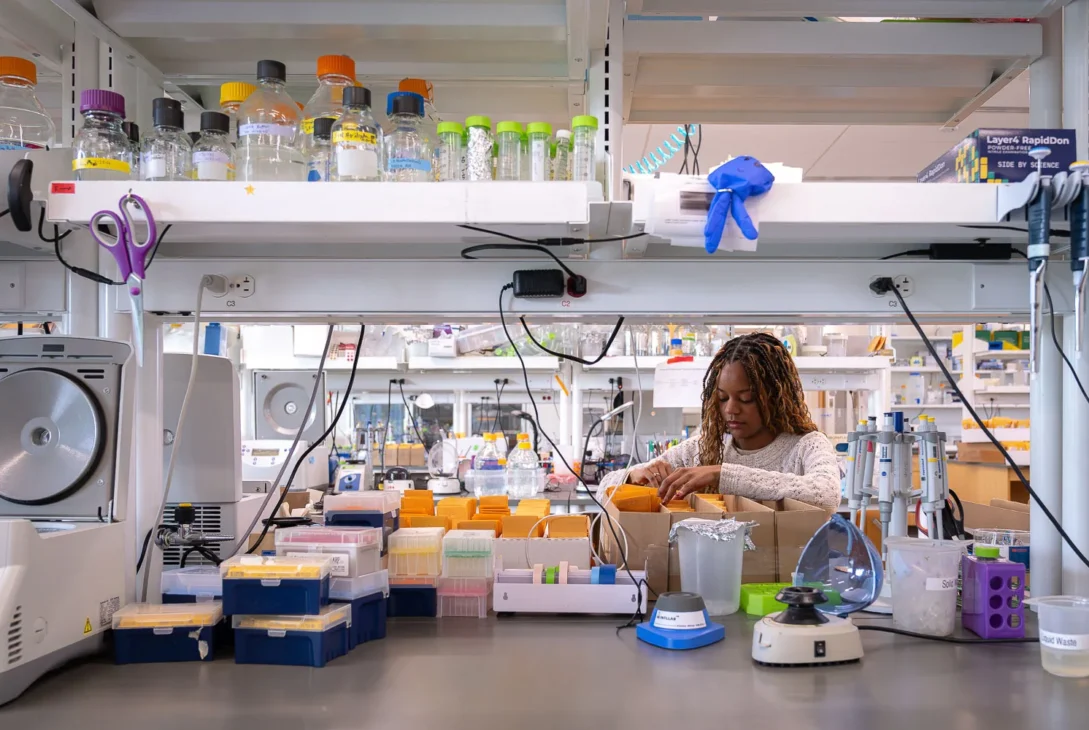
This development has produced successful startup ventures including New Leaf Symbiotics, CoverCress, and Spearhead Bio, along with Geneoscopy, Wugen, SweetSpot from Aegis digital health, and Sentiar. These companies work in diverse areas including microbial technologies for farming, innovative crop production systems, gene-editing tools, precision diagnostic systems, cell and gene therapy approaches, digital health systems, and surgical visualization technology designed to accelerate the path from laboratory discoveries to real-world applications.
Some of these companies originated through BioSTL’s BioGenerator initiative, which transforms promising research into commercial enterprises through financial backing and business support. Others developed within the 39 North district and the associated Helix Center facilities, where shared laboratory spaces and proximity to the Danforth Plant Science Center maintain strong connections to foundational scientific work.
“The innovation ecosystem concept is relatively recent,” explains Justin Raymundo, vice president of innovation ecosystem building at BioSTL. Similar models exist at Research Triangle Park in North Carolina, Massachusetts’ network of life sciences innovation hubs, and Norwich Research Park in England. “Building this requires cooperation between government, business, venture funding, universities, and philanthropic institutions. BioSTL serves as the connecting force.”
Following the initial Battelle study, employment in St. Louis’s bioscience sector has increased by more than 53 percent, showing sector expansion despite broader regional economic challenges. Regional leaders recognize the bioscience field as a principal growth driver—and potentially crucial for the region’s future economic standing if this upward trajectory persists.
“In 2000, St. Louis possessed exceptional research facilities, yet the mechanisms to transform that research into viable companies and sustainable economic expansion were inadequately developed.”
Innovation Centers
The Cortex Innovation District in Midtown represents one of the region’s most prominent catalysts for bringing innovations to market. It consolidates emerging businesses, research organizations, and corporate research facilities in an urban setting that encourages productive collaboration. With hundreds of resident companies and more than $1.3 billion in attracted capital, it serves as a testing ground for entrepreneurs exploring whether their concepts can succeed in St. Louis.
“Twenty-five years ago, St. Louis possessed exceptional research facilities, yet the mechanisms to transform that research into viable companies and sustainable economic expansion were inadequately developed,” states Sam Fiorello, president and CEO of the Cortex Innovation District.
According to Fiorello, Cortex was intentionally created to facilitate the kinds of interactions that help transform laboratory ideas into commercial enterprises. “Within Cortex, founders regularly engage with researchers, venture investors, business executives, and seasoned entrepreneurs who have successfully launched companies,” he explains. “This network of relationships speeds up solution development, eliminates feelings of isolation, and regularly produces collaborations, hiring partnerships, capital arrangements, or paths to commercialization.”
As a worldwide leader in plant science and agricultural technology, the Danforth Plant Science Center functions as both a research powerhouse and an intermediate stage facility where lab breakthroughs increasingly connect to commercial development. Its scope ranges from fundamental plant biology to practical agricultural solutions, with growing emphasis on advancing significant findings toward company launches and collaborative partnerships with established firms.
“Discovery organizations provide the foundation for innovation ecosystems,” states Karla Roeber, vice president of external affairs, office of the president, at the Danforth Plant Science Center. “The Danforth Plant Science Center and Dr. [William] Danforth’s strategic vision enabled the agtech sector to form, develop, and flourish in St. Louis.”
This role has grown increasingly deliberate, as the institution has deepened connections with commercial partners and entrepreneurial initiatives, helping narrow the conventional gap between university-based plant science and commercially viable farm technologies.
Known as 39 North, the innovation zone centered on the Danforth Center represents a unified zone of plant science and agtech enterprises, physically uniting laboratory spaces, young companies, business research teams, and funding sources to facilitate the transition from discovery to startup creation.
“For agricultural innovation, location is critical when considering access to labs, facilities, and tools,” explains Emily Lohse-Busch, executive director of 39 North and formerly executive director of Arch Grants.
“Never before in modern times have more companies been established, grown, and remained in St. Louis.”
Addressing Funding Challenges
Capital scarcity was among the key difficulties highlighted in the 2000 research. In the initial formation stages, this gap has been partially bridged. BioGenerator now functions as a crucial catalyst for launching new companies. Arch Grants distributes non-equity funding intended to attract founders to establish operations in the region. Early-stage support is bolstered by investor networks and combined government-business initiatives. As businesses expand, both domestic and international investment firms now commonly participate.
However, a persistent constraint remains regarding the system’s scope, according to Rubin. “We have the capability to scale three to four times our present startup volume with reasonable confidence in outcomes, given our established track record; the pattern is predictable—for every dollar invested, we generate approximately sixty dollars in global investment for St. Louis enterprises.”
Operational leadership has advanced alongside funding availability. Unlike the earlier period when the ecosystem lacked individuals with track records of launching bioscience companies, today’s region combines locally-developed entrepreneurs, recruited leaders from elsewhere, and mixed leadership arrangements that introduce outside expertise into new ventures. This accelerates company formation, though questions persist about whether this knowledge becomes permanently rooted in the community.
“St. Louis is experiencing more company launches, expansions, and permanent locations than ever recorded in its modern era,” Fiorello states. According to Rubin, BioSTL-supported companies—whether created in its programs or receiving its investment—stay in St. Louis at a rate of roughly 93 percent.
Technology commercialization operations at WashU and Saint Louis University have become increasingly organized, featuring explicit commercialization strategies and stronger connections with ecosystem components. Nevertheless, the primary remaining hurdle is synchronization: ensuring that discovery timing, funding availability, and market readiness align consistently enough to generate a continuous pipeline of companies rather than occasional winners.
While the local system functions more cohesively, its visibility remains limited beyond St. Louis. The region now hosts global partnerships and regular events attracting worldwide investors and venture builders. Nevertheless, external perception still lags behind current reality.
“Most people remain unaware that there is an infrastructure, coordinator, and strategic leader orchestrating this,” Rubin notes. “When they see a biotech company, they think it simply exists. They don’t contemplate how it came to be.”
“The various actors don’t necessarily share the same daily objective. Investors pursue financial gain. Enterprises pursue their particular vision. We must harmonize these divergent motivations.”
Maintaining Growth
Currently, BioSTL functions less as a traditional organization and more as a central coordinating role spanning the broader ecosystem, bringing together investors, regulatory bodies, academic centers, and business founders.
“We unite people, capital, regulation, worldwide networks, and companies. None of this can happen without a central organizer,” Rubin says. “We are the orchestra’s conductor.”
The system succeeds because its participants maintain distinct objectives. Investors seek monetary returns. Academic institutions pursue research advancement and prestige. Enterprises concentrate on expansion. Rather than shared objectives, success comes from strategic overlap.
“The various actors don’t necessarily share the same daily objective,” Rubin explains. “Investors pursue financial gain. Enterprises pursue their particular vision. We must harmonize these divergent motivations.”
The 2000 assessment raised concerns that St. Louis would produce innovations without consistently capturing their financial benefits. The current situation is more nuanced. Company formation is accelerating, available capital is expanding, and tangible infrastructure exists.
“We’ve established something genuine here,” Rubin concludes. “The challenge now is determining if we’re prepared to continue developing it at the pace our potential demands.”
St. Louis Magazine’s “Spotlight on Bioscience” editorial series is supported by BioSTL, a St. Louis–based nonprofit dedicated to turning the region’s world-class research strengths into high-growth startups, a skilled workforce, and a globally recognized innovation hub.