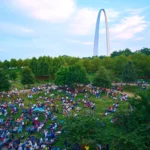

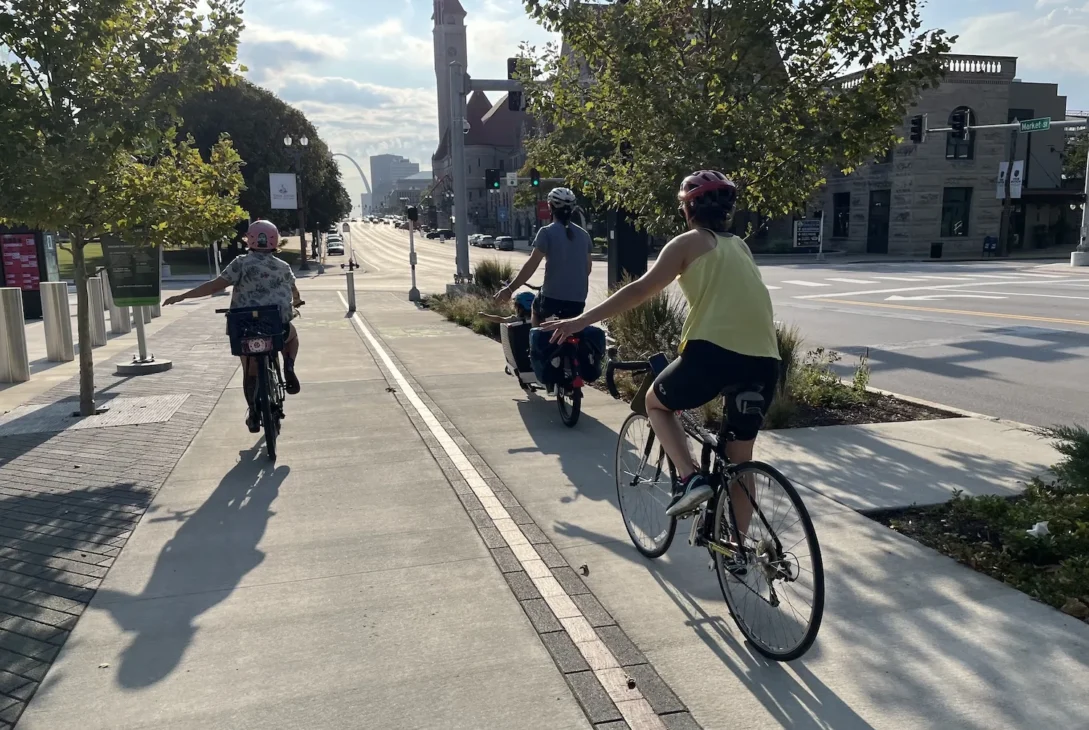
Last month, Great Rivers Greenway officially unveiled one of the first major sections of the long-awaited Brickline Greenway — a sweeping $245 million initiative designed to link Forest Park to the Arch Grounds and Tower Grove Park to Fairground Park through dedicated bike and pedestrian corridors.
At the forefront of the project’s mission is its capacity to spark lasting economic change in underserved areas of North St. Louis. In doing so, the Brickline draws inspiration from comparable projects in other cities that are further along — studying what worked, and being mindful of what didn’t.
Stay informed on local business news and trends
Sign up for the St. Louis Business newsletter and receive the latest insights delivered straight to your inbox every morning.
We will never send spam or annoying emails. Unsubscribe anytime.
And the early signs are encouraging.
“You’re doing all this learning so you don’t repeat the mistakes the rest of us have made,” says Rachel Frierson, chief operating officer of the Detroit Riverfront Conservancy, which manages Detroit’s riverfront along with three greenways.
That learning process has taken local leaders to Atlanta to examine its Beltline — and in particular, the challenges around affordability and displacement that emerged as unintended consequences in some predominantly Black and lower-income Atlanta neighborhoods, says Kelvin Collins, vice president of economic development with the Atlanta Beltline.
“I acknowledge that the Atlanta Beltline has learned quite a few lessons along the way,” he says. “The Brickline is genuinely curious about what those are, and that level of curiosity will help them adopt best practices, accelerate their investment, and sidestep some of those same pitfalls.”
Large-scale infrastructure projects like these have a proven ability to attract private investment once completed. In Atlanta, Collins notes, the Beltline has generated $14 billion in private sector investment.
“We can shout that from the rooftops, but if it doesn’t create real value for local residents and small businesses — if it doesn’t channel investment into historically overlooked areas — then none of it matters,” he adds.
When the project’s early results began attracting private investment, Collins says his organization had to recalibrate to manage its own success and prioritize job creation and small business growth in lower-income communities. They also adjusted the construction timeline, accelerating work in historically underserved parts of the city after initially launching in other areas.
His organization remains committed to ensuring that the growth spurred by the Beltline is equitable — and that longtime residents are positioned to benefit from the new jobs and businesses that emerge as a result.
“Communities want to enjoy the amenity — they just don’t want to be pushed out. That’s a basic human reality,” he says. “The quality-of-life improvements should extend to those who have lived there, endured years of disinvestment, and gone without adequate amenities. Protective strategies for these residents don’t happen on their own — you have to deliberately build them in.”
Collins sees his St. Louis counterparts as being far better positioned to get ahead of what may come, given that the local organization has already established a community development corporation. The newly formed Brickline North Community Development Corporation received its 501(c)(3) nonprofit status last year, enabling it to acquire property and advance other development priorities.
Frierson also commends GRG for putting that structure in place early. “They can hold onto property through the [community development corporation], preserve that value, and then when a neighbor is ready to act, their barrier to entry is significantly lower — or gone entirely,” she says.
Once property values begin to climb, acquisition dollars won’t stretch as far, warns Scott Kratz, president and CEO of Building Bridges Across the River in Washington, D.C. — an organization leading the transformation of an old freeway into a new public park.
“Once that property appreciation flywheel really starts spinning, it will move much faster than nonprofits or even the city can keep up with,” he says. “Identifying key parcels early — before that happens — gives you a chance to be more in control of your own trajectory.”
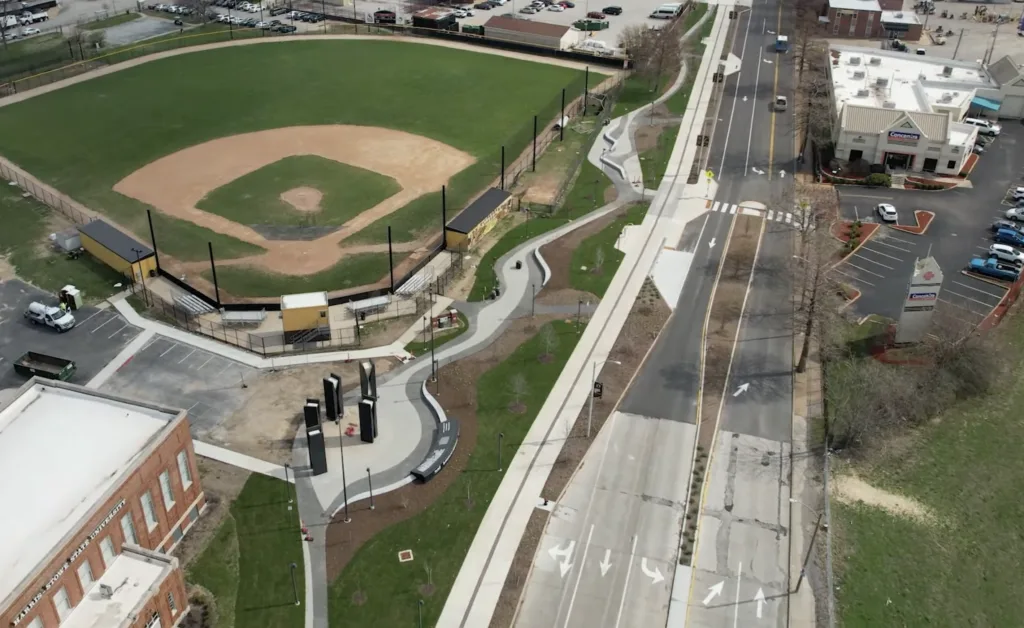
Kratz, Collins, and Frierson all agree that GRG’s decision to prioritize the North Grand Boulevard segment of the Brickline helps build trust within the community that the project will genuinely deliver for North St. Louis.
“For too long, we’ve asked communities with the least investment to be patient and wait for things to reach them,” Frierson says. “Starting a transformative project in those communities sends a clear message: ‘We see you. We’re here for you.'”
Collins adds that this is an area where the Beltline initially fell short — piloting their greenway in more affluent sections of eastern Atlanta before eventually shifting focus to western neighborhoods that had grown skeptical the Beltline would ever reach them.

As more Brickline segments come together, Collins sees a real opportunity to use the greenway to reshape St. Louis’ identity on a broader stage.
“That Market Street trail segment that recently opened was executed beautifully,” he says. “The design quality, the infrastructure, the artwork — all of it signals that something special is happening here. It can be packaged and marketed as a story of energy and vibrancy along the Brickline.”
Part of that means bold branding and marketing that extends the greenway’s reach into unexpected places. The Beltline, for instance, has struck agreements with major airport concession operators — including Hudson Group — to open Beltline-branded retail stores, putting the project in front of the millions of travelers passing through Atlanta’s airport.
“They pay us a royalty fee to use the Beltline brand,” Collins says of Hudson Group. “That’s one example of a revenue-generating opportunity the Brickline or GRG could explore. The Beltline has also been able to bring small businesses located along the trail into those stores to sell their products — giving them access to foot traffic and a customer base they otherwise wouldn’t have been able to reach.”