
On Monday, the Department of Justice unveiled an $1.8 billion compensation fund designed to reimburse individuals who claim they faced persecution by the DOJ while Democrats controlled it, including supporters of President Donald Trump. Detractors have labeled it a “slush fund” intended to benefit Trump’s allies. Interestingly, St. Louisans have played a significant role in how this fund came to exist.
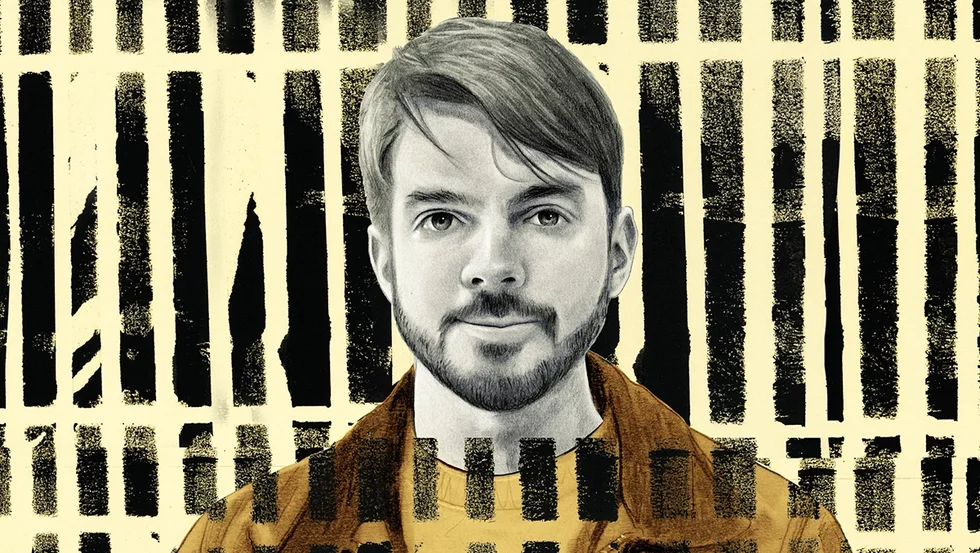
The fund’s creation stems from a settlement in a lawsuit that Trump filed in January as a private citizen against the IRS. In the suit, Trump alleged that the agency failed to stop a former IRS contractor from leaking his tax returns to journalists. Charles Littlejohn, a St. Louis native and Crossroads College Preparatory School alumnus from the Skinker DeBaliviere neighborhood, was that contractor. He is currently serving time in federal prison. (Our 2024 profile provides more information on Littlejohn.)
Get a fresh take on the day’s top news
We promise never to flood your inbox with spam or bothersome messages. You can unsubscribe whenever you choose.
Trump’s initial claim sought $10 billion in damages. However, as Andrew Egger, a White House correspondent for the conservative publication The Bulwark (and a St. Louis native himself) noted during an interview on KMOX, the federal judge handling the case expressed skepticism. Despite Trump suing in his private capacity rather than as president, the lawyers defending the IRS still belonged to his administration.
The attorneys were required to submit briefs by May 20 justifying why this qualified as a genuine “adversarial case” and explaining why the judge shouldn’t view the IRS and Treasury Department as essentially aligned with Trump’s interests.
The DOJ made its settlement announcement and introduced “The Anti-Weaponization Fund” just two days before that deadline arrived.
According to the New York Times report, within “just minutes” of the announcement, “93 Democratic lawmakers submitted court documents alleging the Justice Department had ‘colluded’ with Mr. Trump and requesting that the judge dismiss the case,” implying that the Trump administration had “gotten ahead of the lawmakers” by removing the judge from the equation.
At least one St. Louisan views this development favorably.
“I’m pleased by this news,” remarks attorney Mark McCloskey, who represents hundreds of individuals charged in connection with January 6 who subsequently received pardons. In his view, yesterday’s announcement means “there is a strong likelihood that individuals will receive compensation from the government.”
McCloskey notes he would prefer to see a larger number of review panels for the claims submitted against the new fund. Currently, the settlement specifies only a five-member panel chosen by the attorney general, which McCloskey believes could slow down the review process. (Beyond people prosecuted for January 6, McCloskey suggests individuals like My Pillow CEO Mike Lindell, who provided financial support to efforts challenging the 2020 election results, might qualify for payments as well.) However, McCloskey concludes, “I have no reason to complain.”
McCloskey handled the January 6 cases on a contingency basis and remains uncertain whether today’s announcement will result in him receiving any portion of the $1.8 billion.
McCloskey states, “This presents an entirely new situation.”